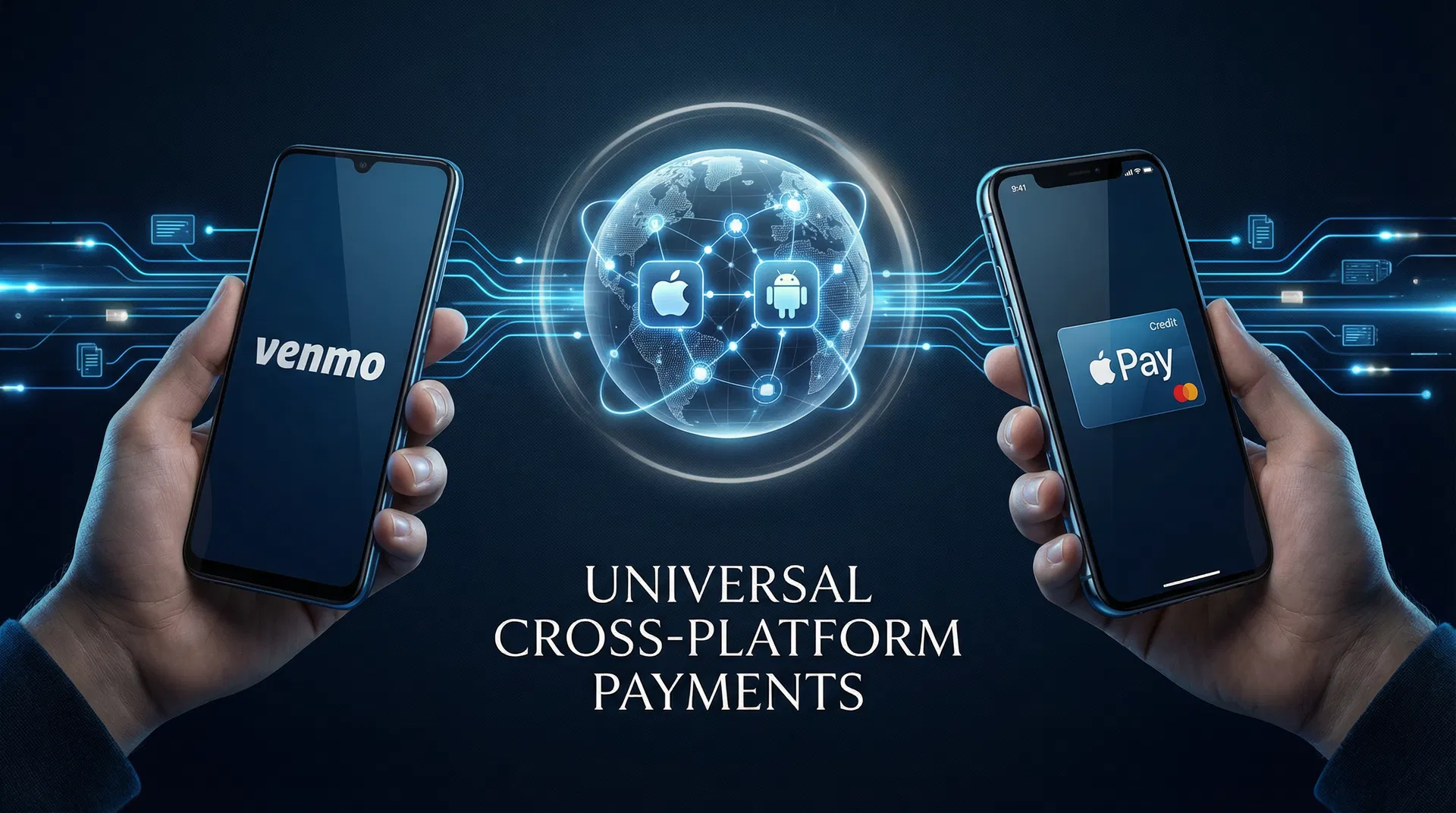
Apple Pay and Venmo are not competitors. They never really were.
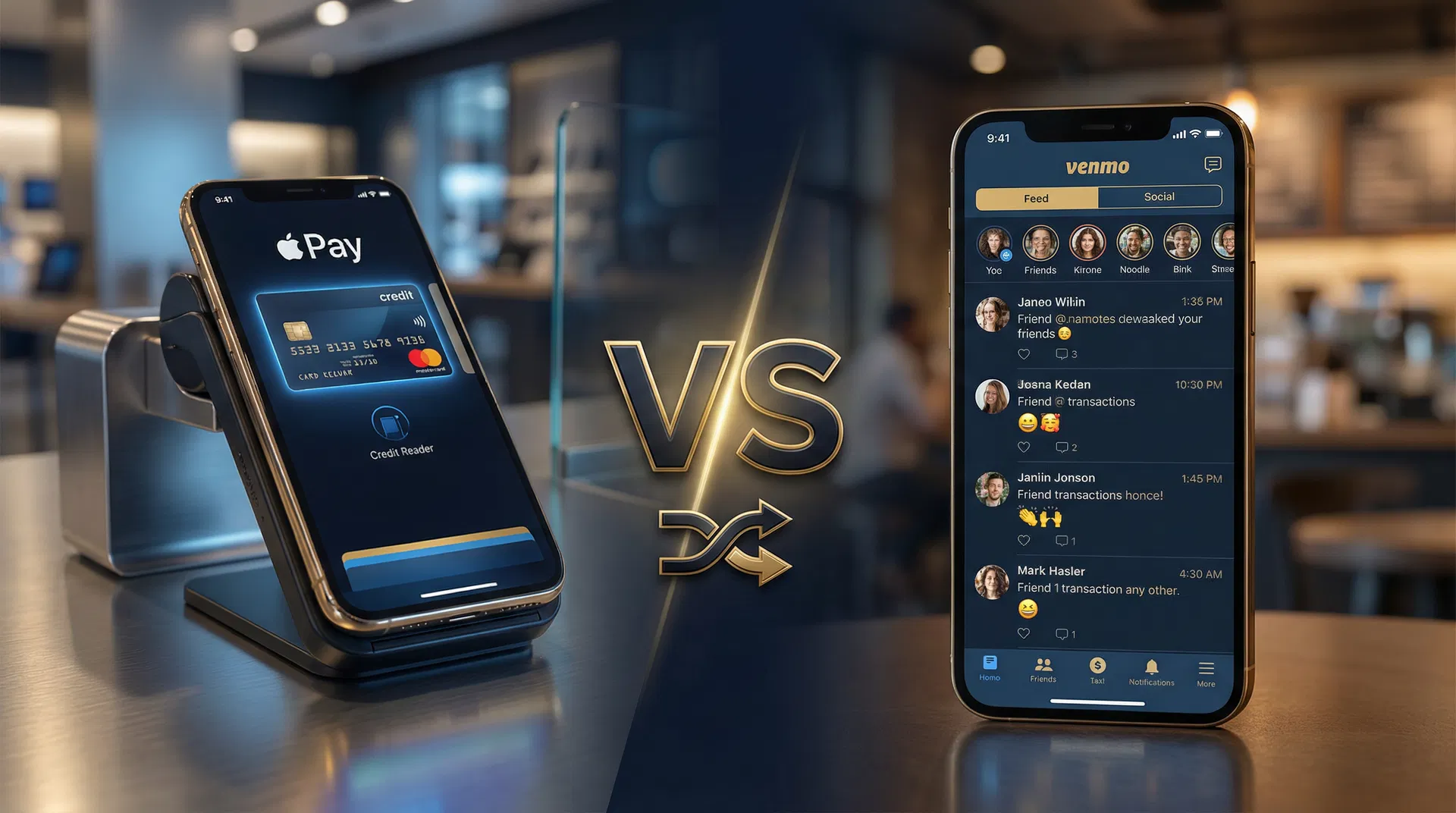
Apple Pay is a tap-to-pay tool built for the physical world. Venmo is a social payments network built for the people in your life. One lives at the checkout counter. The other lives in your group chat. For years, they occupied different lanes and served different moments, which is exactly why an Apple acquisition of PayPal would not produce a winner and a loser between these two platforms. It would produce a merger of two capabilities that Apple has never had simultaneously.
That is the thesis. The rest of this article is the evidence.
What Apple Pay Does Well (And Where It Stops)
Apple Pay launched in October 2014 with a single, clear promise: tap your iPhone at any NFC terminal and pay without pulling out your wallet. A decade later, that promise has scaled into something genuinely significant. Nearly 818 million people worldwide now use Apple Pay, and it is accepted at over 90% of U.S. retailers. Among U.S. mobile wallet users, Apple Pay holds a 49% market share, nearly double that of Google Pay.
The in-store numbers are particularly strong. Apple Pay accounts for approximately 54% of all in-store mobile wallet transactions in the United States, and 80% of its total transaction volume flows through NFC at physical point-of-sale terminals. In fiscal year 2025, U.S. shoppers made $450 billion in Apple Pay purchases, up from $268 billion the prior year. That is not a niche product. That is infrastructure.
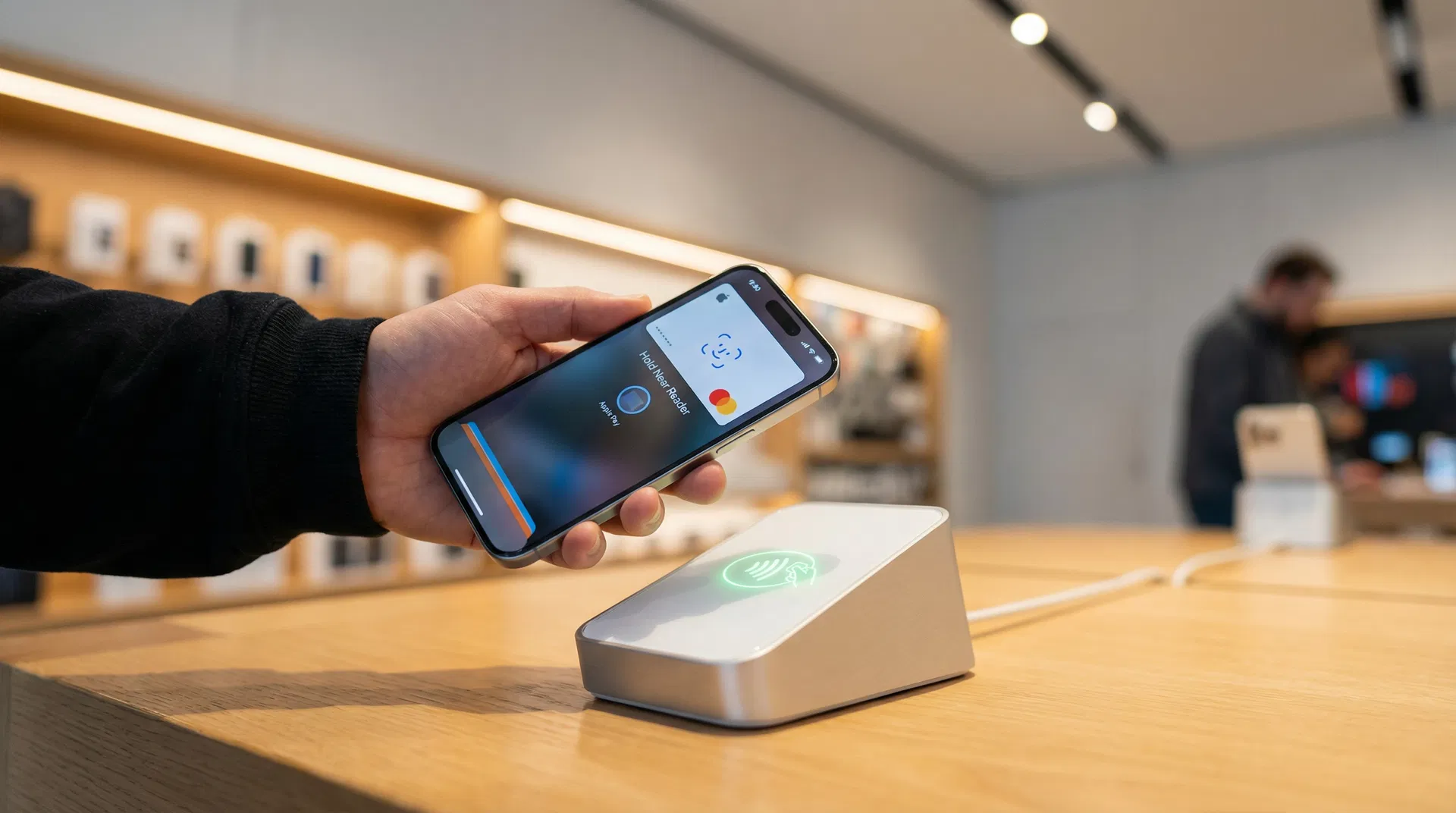
But Apple Pay has a hard ceiling, and it is the Apple ecosystem itself. Apple Pay only works on Apple devices. If you want to send money to someone on Android, Apple Pay cannot help you. If you want to split a dinner bill with a friend who uses a Samsung, you need a different app. That limitation is not an accident. It is a deliberate product decision that has served Apple well in building loyalty within its ecosystem. But it is also the single biggest gap in Apple's financial services stack, and it becomes a strategic liability the moment Apple decides it wants to compete for the full payments market rather than just the iPhone-to-iPhone slice of it.
| Apple Pay Strengths | Apple Pay Limitations |
|---|
| 49% U.S. mobile wallet market share | iOS-only: no Android support |
| Accepted at 90%+ of U.S. retailers | No social or P2P features |
| 818 million global users | Cannot reach non-Apple users |
| 54% of in-store mobile wallet transactions | No standalone app or balance |
| Integrated with Apple Card and Apple Cash | Limited merchant relationship data |
What Venmo Does Well (And Where It Stops)
Venmo's origin story is almost the opposite of Apple Pay's. It was not built for merchants. It was built for friends. The social feed, the emoji reactions, the public transaction history: all of it was designed to make paying someone feel like a social act rather than a financial transaction. That design decision turned out to be one of the most effective user acquisition strategies in fintech history.
Venmo now has approximately 97 million active users in the United States, processing $325 billion in annual transaction volume as of 2025. Roughly 68% of those users are Gen Z or Millennials, and 65% engage with the app at least weekly. Among users aged 18 to 34, Venmo has penetration above 83%. For context, that age cohort represents the highest-spending demographic over the next two decades.

The cross-platform reach is the capability that matters most in the context of an Apple acquisition. Venmo works on any device, iOS or Android, through any bank, in any network. It does not care what phone you have. That universality is what makes it strategically valuable to Apple in a way that no amount of Apple Pay feature development can replicate.
Venmo's limitation is the inverse of Apple Pay's. It has deep penetration among young consumers but limited presence at the physical point of sale. Venmo has been expanding its merchant acceptance, and the Venmo debit card has grown, but it has not cracked the in-store checkout experience the way Apple Pay has. It also lacks the hardware integration that makes Apple Pay feel seamless: the Face ID authentication, the Taptic Engine confirmation, the watch tap. Those are Apple-only experiences that Venmo cannot replicate on its own.
| Venmo Strengths | Venmo Limitations |
|---|
| 97 million U.S. active users | Limited in-store merchant acceptance |
| Cross-platform: works on iOS and Android | No NFC hardware integration |
| 68% Gen Z / Millennial user base | Social feed is a privacy concern for some users |
| $325 billion annual transaction volume | No global footprint outside the U.S. |
| 65% weekly engagement rate | Dependent on PayPal infrastructure |
| Social network effects and brand loyalty | Less trusted by older demographics |
The Merger Scenario: What Actually Happens to Each Platform
If Apple acquires PayPal, the most important strategic decision Apple faces is not what to do with PayPal's merchant network or its 430 million global accounts. The most important decision is what to do with Venmo. There are three plausible scenarios, and each has a different winner.
Scenario 1: Venmo Becomes Apple's Cross-Platform Wallet. This is the highest-probability outcome and the one that makes the most strategic sense. Apple keeps the Venmo brand, integrates Venmo's backend into Apple Wallet, and uses Venmo as the payments layer that reaches Android users. Apple Pay handles in-store NFC transactions for iPhone users. Venmo handles peer-to-peer transfers for everyone, regardless of device. Under this scenario, neither platform eliminates the other. Apple Pay wins at the point of sale. Venmo wins in social and P2P. Apple wins the payments market by owning both lanes simultaneously.
Scenario 2: Venmo Gets Absorbed Into Apple Cash. Apple could decide to migrate Venmo users into an expanded Apple Cash product, effectively sunsetting the Venmo brand over time. This would be the more aggressive integration play, and it would sacrifice Venmo's cross-platform reach in exchange for a cleaner, unified Apple-branded experience. This scenario is lower probability because it would destroy the primary reason Apple paid the acquisition premium. Venmo's value is its Android reach and its Gen Z loyalty. Killing the brand to consolidate into Apple Cash would eliminate both.
Scenario 3: Venmo Operates as a Standalone PayPal Subsidiary. Apple could choose to keep PayPal and Venmo operating as independent subsidiaries, similar to how Google has managed YouTube or how Meta has managed WhatsApp and Instagram. This would preserve Venmo's brand equity and cross-platform positioning while giving Apple access to the transaction data and merchant relationships without forcing a disruptive integration. This is a realistic near-term scenario even if Scenario 1 is the long-term destination. Large acquisitions rarely integrate immediately.
| Scenario | Probability | Who Benefits | Who Is at Risk |
|---|
| Venmo becomes Apple's cross-platform layer | High | Apple, Venmo users, Android users | Google Pay, Cash App, Zelle |
| Venmo absorbed into Apple Cash | Low | Apple (short-term simplicity) | Venmo brand, Android users |
| Venmo operates as standalone subsidiary | Medium (near-term) | PayPal shareholders, Venmo team | Delayed strategic value for Apple |
The Competitive Threat to Everyone Else
The reason this merger scenario matters beyond Apple and PayPal is what it does to the rest of the payments landscape. Google Pay currently holds approximately 30% of the U.S. mobile wallet market. Its primary advantage is Android integration, the same cross-platform reach that makes Venmo valuable. If Apple acquires Venmo and deploys it as a cross-platform payments layer, Google Pay's core differentiator disappears. Google Pay becomes the Android-native wallet competing against an Apple-owned product that works equally well on Android.
Cash App, operated by Block (formerly Square), has approximately 57 million monthly active users and has been aggressively expanding into banking and investing. Its Gen Z penetration overlaps significantly with Venmo's. An Apple-owned Venmo with Apple's marketing budget and hardware integration would be a direct competitive threat to Cash App's user base. Zelle, the bank-consortium P2P network, processes more dollar volume than Venmo but has weaker brand loyalty and no social features. It would likely be insulated from the merger's immediate impact because it operates through existing bank relationships, but it would lose ground over time as Venmo's merchant acceptance expands under Apple ownership.
The Data That Settles the Question
The framing of "Apple Pay vs Venmo" implies a competition. The data suggests a complementary relationship that Apple is uniquely positioned to exploit. Apple Pay's 49% U.S. mobile wallet market share is built almost entirely on in-store NFC transactions. Venmo's 97 million users are built almost entirely on peer-to-peer social payments. There is almost no overlap in use case. A user who taps Apple Pay at a coffee shop and then splits the bill with a friend on Venmo is not choosing between the two products. They are using both products for different purposes in the same transaction sequence.
That behavioral pattern is the strategic insight. Apple Pay gets the merchant. Venmo gets the social graph. Together, they cover the entire payments journey from the moment a consumer decides to spend money to the moment they settle up with the people they spent it with. No other company in the world has both of those assets. If Apple acquires PayPal, it will.
| Metric | Apple Pay | Venmo |
|---|
| U.S. active users | 60 million | 97 million |
| Global users | 818 million | U.S.-only |
| Annual transaction volume | $450 billion (U.S.) | $325 billion |
| Primary use case | In-store NFC payments | Peer-to-peer transfers |
| Platform compatibility | iOS only | iOS and Android |
| Core demographic | 25-44, affluent | 18-34, Gen Z / Millennial |
| Merchant acceptance | 90%+ of U.S. retailers | Limited, expanding |
| Weekly engagement | 52% of enabled users | 65% of active users |
What Happens to Users on Both Platforms
If this merger happens, the practical impact on users will depend on which integration scenario Apple chooses. But across all three scenarios, a few things are likely to remain constant. Apple Pay users on iPhone will see no immediate change. Their tap-to-pay experience at the checkout counter will continue to work exactly as it does today. The change they will notice is in the peer-to-peer experience: Apple Cash will likely gain the ability to send money to Android users for the first time, either through a Venmo integration or a Venmo-powered backend.
Venmo users on Android will gain access to Apple's merchant network over time. The Venmo debit card and Venmo checkout button will likely expand to more merchants as Apple's retail relationships are leveraged. The social feed and the Venmo brand are likely to remain intact, at least in the near term, because they are core to Venmo's user retention. The users who benefit most from this merger are the ones who currently have to maintain two separate apps to cover both use cases. Under a unified Apple-PayPal ecosystem, one wallet could handle everything: in-store NFC, peer-to-peer transfers, online checkout, and cross-platform reach.
Frequently Asked Questions
Will Apple Pay replace Venmo after an Apple-PayPal merger?
Almost certainly not. Apple Pay and Venmo serve fundamentally different use cases. Apple Pay handles in-store contactless payments. Venmo handles peer-to-peer social payments. Replacing one with the other would destroy the strategic value of the acquisition. The more likely outcome is that both platforms continue operating, with Venmo becoming Apple's cross-platform payments layer for users on Android.
Can Apple Pay send money to Android users?
No. Apple Pay is iOS-only and cannot send money to Android users. This is the core limitation that makes Venmo strategically valuable to Apple. Venmo works on both iOS and Android, which means it can reach any recipient regardless of device.
Which platform has more users: Apple Pay or Venmo?
Globally, Apple Pay has significantly more users: approximately 818 million worldwide compared to Venmo's 97 million U.S. users. However, in the peer-to-peer payments category specifically, Venmo dominates in the United States, particularly among users aged 18 to 34.
Would an Apple-PayPal merger hurt Google Pay?
Yes, significantly. Google Pay's primary competitive advantage is Android integration and cross-platform reach. If Apple acquires Venmo and deploys it as a cross-platform payments layer, Google Pay loses its core differentiator. Apple would own a product that works equally well on Android, which is precisely the gap Google Pay currently fills.
Is Venmo profitable?
Venmo is a revenue-generating asset within PayPal's portfolio, primarily through its debit card interchange fees, merchant payment processing fees, and instant transfer fees. PayPal does not break out Venmo's standalone profitability, but analysts estimate it contributes meaningfully to PayPal's total payment volume and is growing at approximately 20% annually.
What is the probability that Apple acquires PayPal?
The community forecast on The Odds Post currently puts the probability at 78% that Venmo becomes the dominant cross-platform payments layer under Apple ownership if the acquisition proceeds. The broader Apple-PayPal acquisition thesis is covered in detail in our companion article: Will Apple Acquire PayPal? The Case for a $70 Billion Deal.
The Bottom Line
Apple Pay wins in-store. Venmo wins peer-to-peer. Neither platform wins everywhere, which is exactly why an Apple acquisition of PayPal would be transformational rather than redundant. The question "which wins after a merger?" assumes the two platforms are in competition. They are not. They are two pieces of a payments puzzle that no single company currently holds. Apple Pay provides the merchant infrastructure and the hardware integration. Venmo provides the social graph, the Gen Z loyalty, and the cross-platform reach. Together, under Apple ownership, they would form the most complete digital payments ecosystem in the United States.
The real winner after this merger is not Apple Pay or Venmo. It is Apple.
Cast your vote on whether Apple will acquire PayPal and what happens to Venmo. The community forecast is live, and the lead plaintiff deadline in the PayPal securities class action is April 20, 2026. This story is moving fast. See the full Venmo prediction and vote here.