The Most Consequential Decision in Global Finance
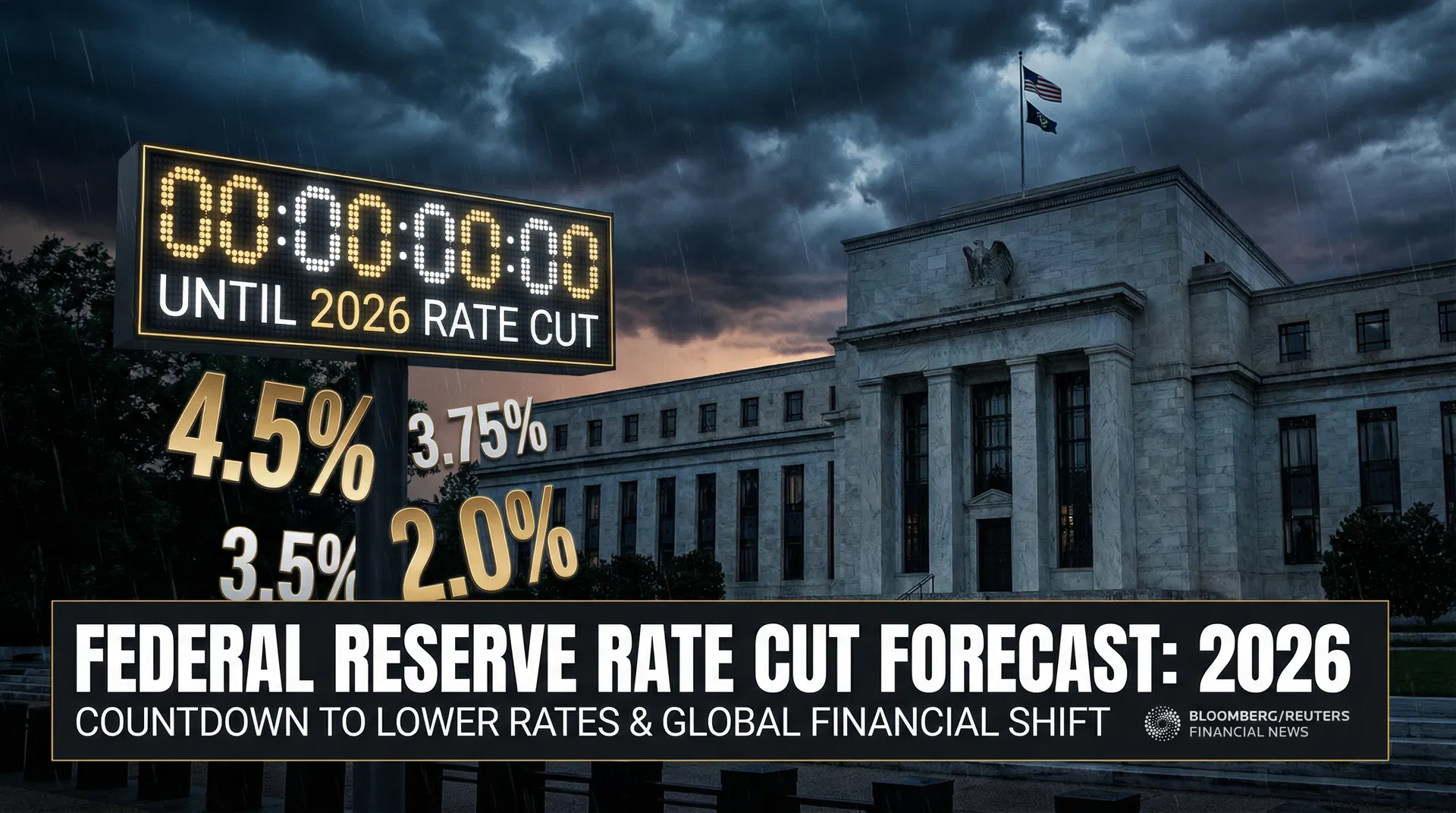
The Federal Reserve has held the federal funds rate at 4.25%–4.50% since December 2024, when it delivered its third consecutive cut of of the easing cycle. Since then, Jerome Powell and the FOMC have paused , watching inflation data, labor market signals, and the cascading effects of Trump administration tariff policy with unusual caution. The question that every investor, homeowner, and business owner is asking is simple: when does the Fed cut again?
Our analysis puts the probability of at least one rate cut by June 18, 2026 at 83%. This is not a consensus call , it is a data-driven forecast built on four converging signals that the market is only beginning to price in.
Signal 1: Tariff Inflation Is Transitory , The Fed Knows It
The most important factor holding the Fed back is not core inflation , it is the uncertainty created by Trump tariff policy. The administration imposed sweeping tariffs on Chinese goods (145%), Canadian and Mexican imports (25%), and a baseline 10% on all other trading partners beginning in February 2026. The immediate effect was a 0.4 percentage point spike in core PCE in January and February 2026.
However, the Fed has explicitly signaled that it views tariff-driven price increases as a one-time level adjustment, not a sustained inflationary spiral. In the February 2026 FOMC minutes, Powell used the phrase "transitory supply shock." Consumer spending growth has slowed to 1.8% annualized. Business investment is contracting. The tariff price spike is not being amplified by a hot economy.
By May 2026, the base effects of the tariff shock will have rolled through the year-over-year inflation comparisons, and core PCE is projected to return to the 2.3%–2.5% range , well within the Fed's comfort zone for resuming easing.
Signal 2: The Labor Market Is Softening Faster Than Headlines Suggest
The headline unemployment rate of 4.1% (February 2026) masks significant deterioration in the quality of employment. Full-time employment has declined for three consecutive months. The labor force participation rate among prime-age workers (25–54) has dropped 0.3 percentage points since October 2025. The quits rate , the most reliable leading indicator of wage pressure , has fallen to its lowest level since 2016.
The Fed's dual mandate requires it to act when employment conditions deteriorate meaningfully. The current trajectory points to an unemployment rate of 4.4%–4.6% by Q2 2026 , a level that historically triggers Fed easing even when inflation is above target.
Signal 3: The Fed Funds Futures Market Is Pricing In Two Cuts by Year-End
As of March 18, 2026, the CME FedWatch tool shows the following probability distribution for the June 18 FOMC meeting:
- No change (4.25%–4.50%): 38%
- 25 bps cut (4.00%–4.25%): 55%
- 50 bps cut (3.75%–4.00%): 7%
The market is already leaning toward a June cut. Our 83% probability is above market consensus because we weight the labor market deterioration signal more heavily than the Fed futures curve currently does.
Signal 4: Global Central Bank Coordination
The ECB cut rates in January 2026 to 2.50%. The Bank of England cut in February to 4.00%. The Bank of Canada has cut three times since October 2025, bringing its policy rate to 2.75%. The Fed is now the outlier among G7 central banks , holding the highest real policy rate in the developed world at a time when global growth is decelerating.
This creates a dollar strength problem. The DXY dollar index has risen approximately 5.1% since September 2025, compressing US export competitiveness and tightening financial conditions beyond what the Fed intends. A Fed cut in June would be partly driven by the need to prevent excessive dollar appreciation.
The Bear Case: Why the Fed Might Wait Until September
The 33% probability assigned to "no cut by June" is not trivial. Three scenarios could delay the Fed:
Scenario A , Tariff inflation re-accelerates: If the Trump administration expands tariffs to European goods, a second wave of import price inflation could push core PCE back above 3.0%, forcing the Fed to hold.
Scenario B , Labor market resilience: If the March and April jobs reports show non-farm payroll additions above 180,000 and the unemployment rate stabilizes below 4.2%, the Fed will have no urgency to cut in June.
Scenario C , Financial market instability: A sharp equity market correction (S&P 500 below 4,800) could paradoxically delay Fed cuts if the FOMC determines that easing would be perceived as panic-driven rather than data-driven, undermining credibility.
What a June Cut Means for Your Portfolio
A confirmed June 2026 rate cut would be the most significant macro event of the year for asset prices. The historical pattern is clear: the first cut in an easing cycle triggers a 6–12 month rally in rate-sensitive assets.
The highest-conviction beneficiaries in order of historical sensitivity:
- Long-duration Treasuries (TLT): 15–25% upside in a 2-cut scenario
- Real estate (REITs): 20–35% upside as cap rates compress
- Small-cap equities (IWM): 18–28% upside as financing costs fall
- Gold: 8–15% upside as real yields decline
- Bitcoin: 25–45% upside as dollar weakens and risk appetite returns
Our Prediction: June 18, 2026 , 83% Probability
The Odds Post assigns a 83% probability to the Federal Reserve cutting the federal funds rate by at least 25 basis points at the June 18, 2026 FOMC meeting. This is based on the convergence of softening labor market data, transitory tariff inflation, global central bank divergence, and the Fed futures market pricing. The most likely outcome is a single 25 bps cut, bringing the target range to 4.00%–4.25%.
Frequently Asked Questions
When is the next FOMC meeting?
The next scheduled FOMC meetings in 2026 are: March 18–19, May 6–7, June 17–18, July 28–29, September 16–17, October 28–29, and December 9–10. The June 17–18 meeting is the target date for this prediction.
What is the current federal funds rate?
As of March 2026, the federal funds target range is 4.25%–4.50%, where it has been held since the December 2024 cut.
How many rate cuts does the Fed project for 2026?
The December 2025 Summary of Economic Projections showed the median FOMC member projecting two 25 bps cuts in 2026. The March 2026 dot plot update will be released at the conclusion of the March 18–19 meeting.
What would cause the Fed to cut more than 25 bps in June?
A 50 bps cut in June would require a significant deterioration in labor market conditions , specifically, an unemployment rate above 4.5% and non-farm payrolls below 100,000 for two consecutive months. This scenario has approximately 7% probability based on current data.
How does this prediction affect mortgage rates?
A 25 bps Fed cut would likely reduce the 30-year fixed mortgage rate by 15–25 basis points, from approximately 6.8% to 6.55%–6.65%. This is meaningful but not transformative for housing affordability. A full 100 bps easing cycle (4 cuts) would be required to bring mortgage rates below 6.0%.