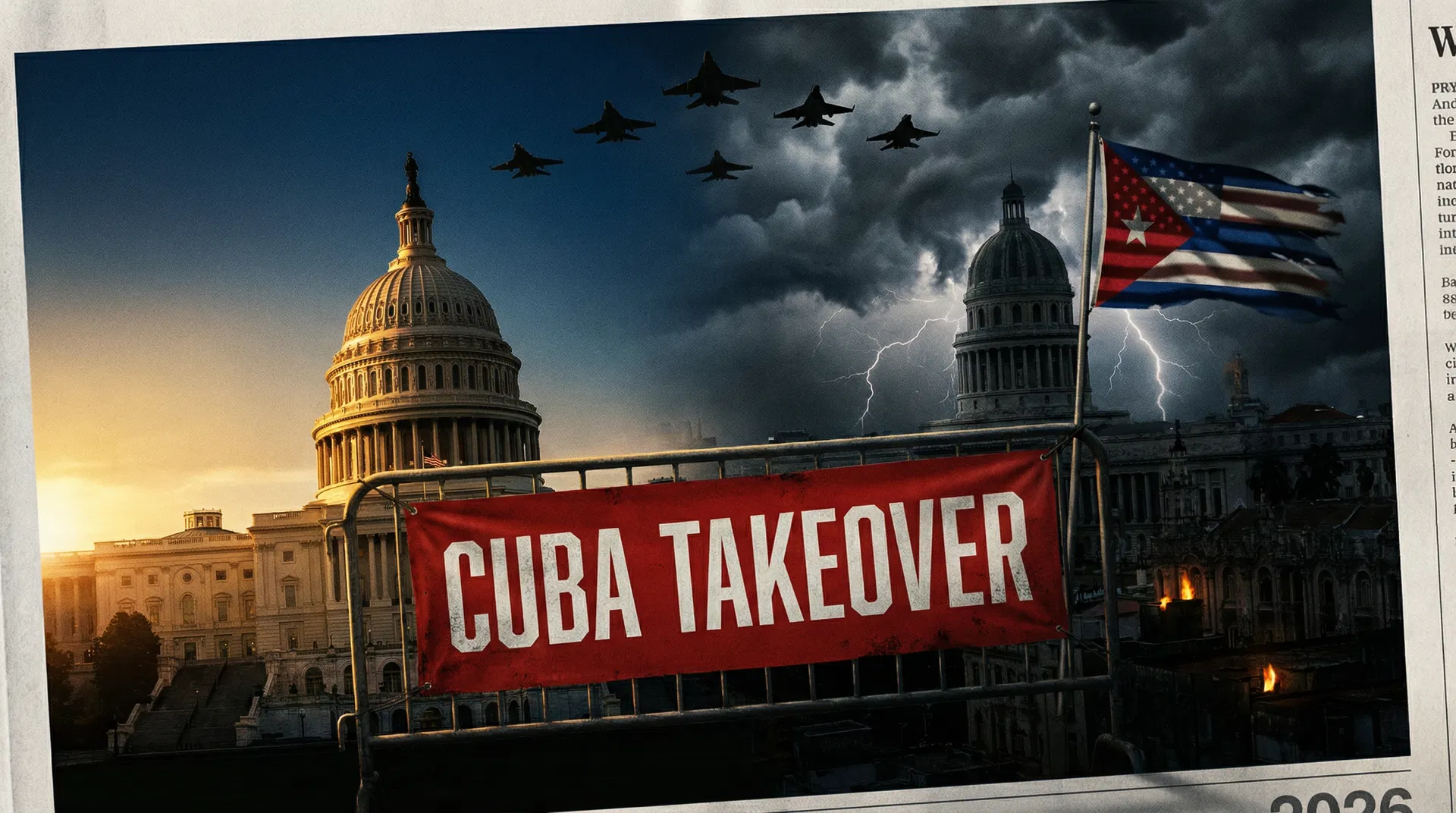
Cuba faces its most severe energy crisis in decades, with the island nation projected to run out of fuel within three weeks. Facing economic collapse and daily blackouts exceeding twelve hours, the Cuban government will be forced to negotiate an unprecedented oil deal with the United States and potentially Venezuela's new government by early March 2026.
The prediction hinges on a stark reality: Cuba has no viable alternatives. With only one oil shipment arriving in 2026, a mere 84,900 barrels from Mexico, and all traditional suppliers either cutting ties or facing US pressure, Havana's options have evaporated. The Trump administration's executive order imposing tariffs on any nation selling oil to Cuba has effectively isolated the island, creating conditions that make negotiation inevitable rather than optional.
The Perfect Storm
Cuba's energy infrastructure has been deteriorating for years, but recent developments have accelerated the crisis to a breaking point. The island's thermoelectric plants, already plagued by decades of deferred maintenance and inadequate investment, now face a complete fuel cutoff. Diesel, which powers not only electricity generation but also transportation, agriculture, water distribution, and industrial operations, is becoming increasingly scarce.
Energy expert Jorge Piñón of the University of Texas describes the potential impact as "catastrophic." Without diesel, Cuba's already fragile systems, from hospitals to food distribution networks, would cease to function. The economic collapse that began in 2019, with an eleven percent contraction through 2024 and an additional five percent decline through September 2025, would accelerate into a humanitarian disaster.
The Trump administration has made its intentions unmistakable. President Trump's statement that "Cuba will be failing pretty soon" signals a deliberate strategy to force regime change or, at minimum, extract major concessions from Havana. The US Chargé d'affaires to Cuba, Mike Hammer, told diplomats that while "Cubans have complained for years about 'the blockade,'" now "there is going to be a real blockade."
Supply Lines Severed
Every traditional oil supplier to Cuba has either stopped shipments or faces insurmountable pressure to do so. Venezuela, which historically provided subsidized oil that sustained Cuba's economy, has sent zero shipments since the US-backed removal of Nicolás Maduro on January 3, 2026. Mexico, under intense pressure from Washington, cancelled its most recent scheduled shipment despite President Claudia Sheinbaum's warnings that US actions "could trigger a far-reaching humanitarian crisis."
Russia's last shipment arrived in October 2025, and Algeria's in February 2025. China, often cited as a potential savior, has historically purchased oil from Cuba rather than supplying it. With Cuba's fuel reserves depleting rapidly and the February 22 deadline approaching, the mathematics of survival leave no room for ideological posturing.
Why a Deal is Inevitable
The Cuban government's response to the crisis has been notably restrained compared to Venezuela's defiant stance before Maduro's fall. While releasing videos of military training exercises and condemning US actions as violations of international law, Cuban officials have avoided the bombastic rhetoric that characterized Venezuela's approach. This measured response suggests Havana recognizes the futility of resistance and is already laying groundwork for negotiations.
Wall Street Journal reports indicate US officials are actively seeking Cuban government members willing to "cut a deal," echoing the strategy that preceded Venezuela's regime change. However, unlike Venezuela, Cuba faces an immediate existential threat that makes negotiation not just attractive but necessary for survival. The Cuban leadership understands that maintaining power requires keeping the lights on and preventing complete economic collapse.
A deal would likely involve Cuba agreeing to purchase US oil, a dramatic reversal of sixty-seven years of embargo policy, in exchange for limited sanctions relief. Venezuela's new government, seeking to rebuild relationships with Washington and revive its oil industry, could participate as a supplier under US approval. Such an arrangement would give the Trump administration a foreign policy victory, demonstrate US influence in the Western Hemisphere, and potentially open pathways for further political changes in Cuba.
The Timeline
With fuel reserves projected to last only until late February, negotiations must begin immediately to prevent total collapse. The logistics of arranging oil shipments, even once a deal is reached, require weeks of preparation. Therefore, an agreement must be finalized by early March at the latest to prevent the catastrophic scenario energy experts warn about.
The Cuban government has limited leverage but one crucial card: the threat of a massive refugee crisis. A complete energy collapse would trigger an exodus that would dwarf previous migration waves, creating a political crisis for the United States. This reality gives Washington an incentive to facilitate a deal that stabilizes Cuba enough to prevent humanitarian disaster while extracting maximum political concessions.
Implications and Uncertainties
If this prediction proves correct, the geopolitical implications extend far beyond Cuba. A US-Cuba oil deal would represent the most significant thaw in relations since the brief Obama-era opening, potentially reshaping Caribbean and Latin American dynamics. For Venezuela, participation in such an arrangement could accelerate its reintegration into global oil markets and US-led hemispheric frameworks.
However, significant uncertainties remain. The Trump administration's willingness to accept anything short of regime change is unclear. Cuban hardliners may prefer collapse to capitulation, gambling that China or Russia will intervene at the last moment. Technical and logistical challenges in rapidly establishing new supply chains could delay implementation even if political agreement is reached.
The next four weeks will reveal whether economic reality can overcome decades of ideological entrenchment. For Cuba, the choice is stark: negotiate with Washington or face systemic collapse. For the United States, the opportunity to reshape Cuban politics without military intervention is unprecedented. The convergence of these factors makes a deal not just possible but probable within the one-month timeframe.